After my fall down the Gamone stairs, just over a year ago, medical staff examined me to discover if there had been any brain damage, and they said no. Later, in Bretagne, I had several clear indications that my brain seemed to be working successfully. Above all, I found that my technical computing skills on the Macintosh were still perfectly intact (regardless of how family members looked upon this question).
I was still intrigued by the undeniable existence of certain traces of my accident in parts of my face and head, not to mention minor eyesight problems. For example, I have a document that presents an image of a part of my head (I won't provide details) containing a small "pool of muck" that flowed there after my accident. Obviously, I often asked myself how and when this "pool of muck" might disappear, if ever. That's to say, I couldn't imagine that it would simply dry up magically. Surely the liquid "muck" had to flow somewhere.
Well, believe it or not, there have been moments, quite recently, when I suddenly "picked up" an unexpected series of "movements" in my head, as if a process had started. It might continue for ten minutes, during which time I would remain totally incapable of deciding what was happening. There would be no unpleasant sensations, and certainly no pain. Only unexpected noises, like static in an old radio. Then the noises would suddenly stop, just as rapidly as they had started.
Today, I'm persuaded that I was in fact listening to various nerve-repair operations. Besides, these alleged activities have been accompanied, in more-or-less the same time frame, by clear demonstrations that my thinking and memory were returning to normal.
When I decided to leave Paris and move to the Dauphiné province, I had the ridiculous impression that I was becoming bored with the French capital. To be honest, it was William Skyvington who was becoming boring, not Paris. Samuel Johnson [1709-1784] illustrated this kind of situation in the case of the British capital.
"Why, Sir, you find no man, at all intellectual, who is willing to leave London.
No, Sir, when a man is tired of London, he is tired of life;
for there is in London all that life can afford."
I recently published a few stupid blogs about blogging. I soon realized that it was akin to saying that I was tired of London. So, I deleted those silly posts.
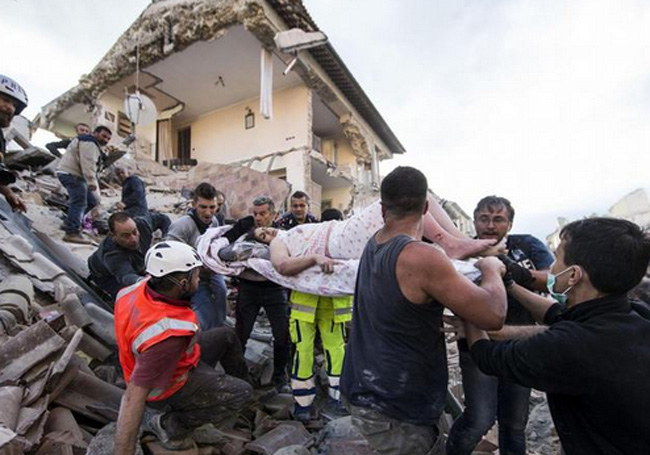
Human lives can be snuffed out in an instant, and the traces of an ancient village can be reduced to rubble.
We humans have never understood sudden disappearance, and we never shall.
We cannot grasp the way in which the sounds of life might be suddenly reduced to silence.
Survival becomes the only meaningful goal, but we shall never understand why one friend survives whereas countless others are no longer there.
Do we really understand anything whatsoever about our human existence? No, our brains are not powerful enough for understanding. But our eyes are strong enough to weep, and our voices, to cry.
When I moved to the Alpine village of Saint-Pierre-de-Chartreuse in the summer of 1993, I came upon an Australian tomb in the church cemetery, just opposite the building in which I had found a tiny flat.
Click to enlarge slightly.
It was the grave of two young Australian students who were killed in March 1966 when they were leaving the village in their car, bound for Grenoble. Blinded by the early-morning winter sun, they skidded off the road and rolled violently into the valley, a hundred yards lower down.
The driver Nicholas Jager, 17, died instantly.
His sister Christina Jager, 18, died three days later, in the Voiron hospital.
Their 16-year-old brother Michael Jager survived.
Two younger children — Jeremy, 11, and Claire, 10 — were attending a local school on the day of the accident. Here are two photos of the fatal corner that I took in 1993.
On that day of 7 March 1966, when the Alpine sun in the ancient monastic village of Saint-Pierre-de-Chartreuse blinded Christina and Nicolas, forever, one of the world's most popular songs was The Sun ain't gonna Shine Anymore by the Walker brothers.
On the web, today, you can find a short article about the accident from Melbourne's The Age of 9 March 1966. [Curiously, the article confuses the given names of the two brothers, Nicholas and Michael Jager.]
The children's father, Charles Henry Jager [1919-2008], was a well-known Melbourne cattle breeder and bookmaker.
Let’s suppose you’ve just ordered an impressive automobile, made in France, and that you suddenly learn that detailed technical descriptions of the manufacturer’s electronic devices for automobiles have just been stolen. As a future owner of a product from that French manufacturer, you might feel worried.
That kind of situation has just arisen in Australia concerning their massive order for French submarines. In a nutshell, the Australian press has revealed that a massive leak has been detected, apparently in India (?), concerning a model of the Scorpène submarine, manufactured by the French shipbuilder DCNS, and sold to the navies of India, Malasia, Chili and Brazil.
Worker at DCNS
Scorpène submarine
Let me point out immediately that the Scorpène is not the model sold to Australia, whose order concerns the Barracuda submarine, quite different to the Scorpène. Not surprisingly, France and the French manufacturer DCNS will be carrying out an in-depth investigation into the Scorpène leak. For the moment, nothing indicates that this Scorpène leak might present the slightest problem to Australia's future maritime defence.
You might subscribe to The Australian in order to obtain an original article on this leak. Here are some extracts of this article that were sent to me this morning by a political contact:
Our French submarine builder in massive leak scandal
The French company that won the bid to design Australia’s new $50 billion submarine fleet has suffered a massive leak of secret documents, raising fears about the future security of top-secret data on the navy’s future fleet.
The stunning leak, which runs to 22,400 pages and has been seen by The Australian, details the entire secret combat capability of the six Scorpene-class submarines that French shipbuilder DCNS has designed for the Indian Navy.
A variant of the same French-designed Scorpene is also used by the navies of Malaysia, Chile and, from 2018, Brazil, so news of the Edward Snowden-sized leak — revealed today — will trigger alarm at the highest level in these countries. Marked “Restricted Scorpene India”, the DCNS documents detail the most sensitive combat capabilities of India’s new $US3 bn ($3.9bn) submarine fleet and would provide an intelligence bonanza if obtained by India’s strategic rivals, such as Pakistan or China.
The leak will spark grave concern in Australia and especially in the US where senior navy officials have privately expressed fears about the security of top-secret data entrusted to France.
In April DCNS, which is two-thirds owned by the French government, won the hotly contested bid over Germany and Japan to design 12 new submarines for Australia. Its proposed submarine for Australia — the yet-to-be-built Shortfin Barracuda — was chosen ahead of its rivals because it was considered to be the quietest in the water, making it perfectly suited to intelligence-gathering operations against China and others in the region.
Any stealth advantage for the navy’s new submarines would be gravely compromised if data on its planned combat and performance capabilities was leaked in the same manner as the data from the Scorpene. The leaked DCNS data details the secret stealth capabilities of the six new Indian submarines, including what frequencies they gather intelligence at, what levels of noise they make at various speeds and their diving depths, range and endurance — all sensitive information that is highly classified. The data tells the submarine crew where on the boat they can speak safely to avoid detection by the enemy. It also discloses magnetic, electromagnetic and infra-red data as well as the specifications of the submarine’s torpedo launch system and the combat system.
It details the speed and conditions needed for using the periscope, the noise specifications of the propeller and the radiated noise levels that occur when the submarine surfaces.
The data seen by The Australian includes 4457 pages on the submarine’s underwater sensors, 4209 pages on its above-water sensors, 4301 pages on its combat management system, 493 pages on its torpedo launch system and specifications, 6841 pages on the sub’s communications system and 2138 on its navigation systems.
The Australian has chosen to redact sensitive information from the documents.
Prime Minister Malcolm Turnbull said it was important to note the submarine DCNS was building for India was a completely different model to the one it will build for Australia and the leaked information was a few years out of date. Nevertheless, any leak of classified information was a concern.
“We have the highest security protections on all of our defence information, whether it is in partnership with other countries or entirely within Australia,” he told the Seven Network today.
“But clearly, it is a reminder that, particularly in this digital world, cyber security is of critical importance.”
Influential senator Nick Xenophon said he would pursue the security breach when parliament returns next week.
Senator Xenophon, who leads a bloc of three senators, said Australia needed serious explanations from DCNS, the federal government and the Defence Department about any implications for Australia.
“This is really quite disastrous to have thousands of pages of your combat system leaked in this way,” the senator told ABC radio.
Sea trials for the first of India’s six Scorpene submarines began in May. The project is running four years behind schedule.
The Indian Navy has boasted that its Scorpene submarines have superior stealth features, which give them a major advantage against other submarines.
The US will be alarmed by the leak of the DCNS data because Australia hopes to install an American combat system — with the latest US stealth technology — in the French Shortfin Barracuda.
If Washington does not feel confident that its “crown jewels’’ of stealth technology can be protected, it may decline to give Australia its state-of-the-art combat system.
DCNS yesterday sought to reassure Australians that the leak of the data on the Indian Scorpene submarine would not happen with its proposed submarine for Australia. The company also implied — but did not say directly — that the leak might have occurred at India’s end, rather than from France. “Uncontrolled technical data is not possible in the Australian arrangements,” the company said. “Multiple and independent controls exist within DCNS to prevent unauthorised access to data and all data movements are encrypted and recorded. In the case of India, where a DCNS design is built by a local company, DCNS is the provider and not the controller of technical data.
“In the case of Australia, and unlike India, DCNS is both the provider and in-country controller of technical data for the full chain of transmission and usage over the life of the submarines.”
However, The Australian has been told that the data on the Scorpene was written in France for India in 2011 and is suspected of being removed from France in that same year by a former French Navy officer who was at that time a DCNS subcontractor.
The data is then believed to have been taken to a company in Southeast Asia, possibly to assist in a commercial venture for a regional navy.
It was subsequently passed by a third party to a second company in the region before being sent on a data disk by regular mail to a company in Australia. It is unclear how widely the data has been shared in Asia or whether it has been obtained by foreign intelligence agencies.
The data seen by The Australian also includes separate confidential DCNS files on plans to sell French frigates to Chile and the French sale of the Mistral-class amphibious assault ship carrier to Russia. These DCNS projects have no link to India, which adds weight to the probability that the data files were removed from DCNS in France.
DCNS Australia this month signed a deed of agreement with the Defence Department, paving the way for talks over the contract which will guide the design phase of the new submarines. The government plans to build 12 submarines in Adelaide to replace the six-boat Collins-class fleet from the early 2030s. The Shortfin Barracuda will be a slightly shorter, conventionally powered version of France’s new fleet of Barracuda-class nuclear submarines.
Defence Industry Minister Christopher Pyne said his officials believed the leak had “no bearing” on the Australia’s submarine program.
“The Future Submarine Program operates under stringent security requirements that govern the manner in which all information and technical data is managed now and into the future,” Mr Pyne’s office said in a statement.
“The same requirements apply to the protection of all sensitive information and technical data for the Collins class submarines, and have operated successfully for decades.”